Home » Social Media Ban

Category Archives: Social Media Ban

Australia’s social media ban won’t stop cyberbullying


[Roxy Aln / Unsplash]

Tama Leaver, Curtin University

The Australian Federal government’s Online Safety Amendment (Social Media Minimum Age) Act, commonly referred to as the “social media ban”, is now in effect.

In the months leading up to the ban, there have been a lot of stories about what will actually happen once the legislation is active, and many people believe the ban will prevent cyberbullying. It won’t – because bullying is a social problem, which can’t be solved with a quick technical fix.

What is happening?

The ban requires that social media platforms take reasonable steps to prevent Australians under the age of 16 from having an account on those platforms.

The platforms definitely included in the ban are Facebook, Instagram, Threads, Kick, Reddit, Snapchat, TikTok, Twitch, X (née Twitter) and YouTube.

This list is dynamic and will likely change and grow over time.

Some platforms are, initially at least, definitely not subject to the ban, including Discord, GitHub, Google Classroom, LEGO Play, Messenger, Pinterest, Roblox, Steam and Steam Chat, WhatsApp and YouTube Kids.

What isn’t happening?

There are a lot of myths and misunderstandings circulating about the ban.

Some people have the impression the ban is a broad piece of legislation to prevent any online harms children and young people might encounter. It isn’t.

Rather, this legislation narrowly targets social media platforms, and can only prevent teens and young people from having an account on those platforms.

Despite recent concerns raised about the gaming platform Roblox, for example, it is not subject to the ban as its primary purpose is gaming, not social media.

Similarly, while teens may not be able to have accounts on these platforms, they may still be able to access content on many of them.

On YouTube, for example, under-16s can still watch public YouTube videos. They just can’t subscribe to channels, like videos or leave comments.

Cyberbullying

Cyberbullying – or bullying that extends into online spaces and platforms – is a significant issue for young Australians.

A 2021 report found that more than one third of Australian young people had experienced bullying online within a six month period.

Many teens, parents and trusted adults hope the ban will prevent cyberbullying.

Some of the most recognisable faces and loudest voices promoting the ban are bereaved parents who believe their children were cyberbullied to the point of suicide.

That is incredibly tragic, and any parent in that situation would understandably be pushing for change so no one else has that awful experience.

Unfortunately, the social media ban will not stop cyberbullying.

In fact, it may not reduce cyberbullying significantly at all.

While under-16s won’t have Snapchat and Instagram accounts, they will still have access to messaging platforms such as WhatsApp, Messenger, Discord and others.

It would be naive to believe that bullying activity will not simply shift from one platform to another.

The shift might make cyberbullying worse in some ways, as bullying on more closed messaging platforms may be less visible to others.

Bullying is never (just) a technology problem

It can be reassuring to think of bullying as somehow just a social media or online problem.

While cyberbullying extends the abuse of bullying into homes and bedrooms, platforms don’t actually bully. People do. And often those people are peers, colleagues and classmates, and much less often strangers.

In some ways the term cyberbullying itself is unhelpful. It puts focus on the “cyber” component, when the bullying is actually the problem.

Bullying is widespread in Australian schools and well beyond.

Dealing with cyberbullying

If you or a young person you know is facing cyberbullying, there is plenty of guidance available.

Youth mental health service Reachout offers very clear advice for young Australians on how to deal with cyberbullying.

Strategies include slowing down before young people respond to bullying content, taking the space to calm down before doing anything, keeping screenshots and evidence, trying not to check for new messages or content too often, and blocking or reporting those doing the bullying.

For parents and trusted adults supporting young people dealing with bullying, the eSafety Commissioner’s website also provides clear, actionable advice.

Indeed, having the support of at least one trusted adult is a key part in helping young people navigate and cope with experiences of cyberbullying.

The social media ban is a fairly blunt tool, and does not have the complexity needed to directly address or necessarily even reduce cyberbullying.

However, if the ban allows Australian families to continue, or even begin, conversations about young people’s experiences online, then that’s of real value to young Australians.

For parents and trusted adults, keeping that conversation going is vital. An open door to a trusted adult is key to supporting young people, no matter what they experience online.

For under-16s, they should keep in mind that they have not broken the law if they get around the ban. The onus is entirely on platforms to prevent under 16s having accounts.

No magic button

Under-16s, their parents, and their trusted adults, should feel perfectly able and safe to have full and frank conversations about any online experiences, including on social media platforms.

There is no quick fix, no magic button that will stop cyberbullying. The social media ban certainly won’t do it – and it shouldn’t give young people or adults a false sense of security.

For young Australians, having access to trusted adults is vital to reducing online bullying, building resilience, and shifting the culture.

In situations where trusted adults are not available, young people should remember organisations like ReachOut, Headspace and the Kids Helpline (1800 551 800) are there to provide support, too.The Conversation

Tama Leaver, Professor of Internet Studies, Curtin University

This article is republished from The Conversation under a Creative Commons license. Read the original article.
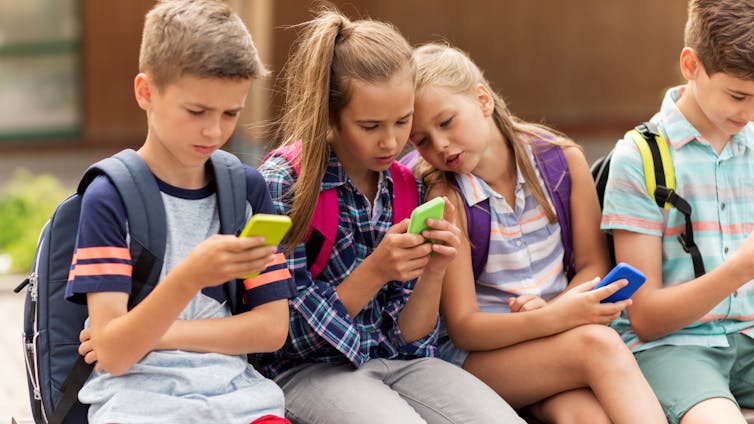
Australia is about to ban under-16s from social media. Here’s what kids can do right now to prepare


Dolgachov / Getty Images

Daniel Angus, Queensland University of Technology and Tama Leaver, Curtin University

If you’re a young person in Australia, you probably know new social media rules are coming in December. If you and your friends are under 16, you might be locked out of the social media spaces you use every day.

Some people call these rules a social media ban for under 16s. Others say it’s not a “ban” – just a delay.

Right now we know the rules will definitely include TikTok, Snapchat, Instagram, Facebook, Threads, Reddit, X, YouTube, Kick and Twitch. But that list could grow.

We don’t know exactly how the platforms will respond to the new rules, but there are things you can do right now to prepare, protect your digital memories, and stay connected.

Here’s a guide for the changes that are coming.

Download your data

TikTok, Instagram, Snapchat and most other platforms offer a “download your data” option. It’s usually buried in the app settings, but it’s powerful.

A data download (sometimes called a “data checkout” or “export”) includes things like:

  • photos and videos you’ve uploaded

  • messages and comments

  • friend lists and interactions

  • the platform’s inferences about you (what it thinks you like, who you interact with most, and the sort of content it suggests for you).

Even if you can’t access your account later, these files let you keep a record of your online life: jokes, friendships, cringey early videos, glow-ups, fandom moments, all of it.

You can save it privately as a time capsule. Researchers are also building tools to help you view and make sense of it.

Downloading your archive is a smart move while your accounts are still live. Just make sure you store it somewhere secure. These files can contain incredibly detailed snapshots of your daily life, so you might want to keep them private.

Don’t assume platforms will save anything for you

Some platforms may introduce official ways to export your content when bans begin. Others may move faster and simply block under-age accounts with little warning.

As one example, Meta – the parent company of Facebook, Instagram and Threads – has begun to flag accounts they think belong to under-16s. The company has also provided early indications that it will permit data downloads after the new rules comes into effect.

For others the situation is less clear.

Acting now, while you can still log in normally, is the safest way to keep your stuff.

Four ways to stay connected

Losing access to the platform you use every day to talk with friends can feel like losing part of your social world. That’s real, and it’s okay to feel annoyed, worried, or angry about it.

Here are four ways to prepare.

1. Swap phone numbers or handles on non-banned platforms now.

Don’t wait for the “you are not allowed to use this service” message.

2. Set up group chats somewhere stable.

Use iMessage, WhatsApp, Signal, Discord, or whatever works for your group and doesn’t rely on age-restricted sign-ups.

3. Keep community ties alive.

Many clubs, fandom spaces, gaming groups and local communities are on multiple sites or platforms (Discord servers, forums, group chats). Get plugged into those spaces.

4. Don’t presume you’ll be able to get around the ban.

Teens who get around the ban are not breaking the law. There is no penalty for teens, or parents who help them, if they do get around the ban and have access to social media under 16.

It’s up to platforms to make these new laws work. Not teens. Not parents.

Do prepare, though. Don’t assume you will be able to get around the ban.

Just using a VPN to pretend your computer is in another country, or a wearing rubber mask to look older in an age-estimating selfie, probably won’t be enough.

A note for adults: take big feelings seriously

Most people recognise the social connections, networks and community enabled by social media are valuable – especially to young people.

For some teens, social media may be their primary community and support group. It’s where their people are.

It will be difficult for some when that community disappears. For some it may be even worse.

The ideal role of trusted adults is to listen, validate and support teens during this time. No matter how older people feel, for young people this may be like losing a large part of their world. For many that will be really hard to cope with.

Services like Headspace and Kids Helpline (1800 55 1800) are there to support young people, too.

How to keep your agency in a frustrating situation

A lot of people will find it frustrating that we’re excluding teens, rather than forcing platforms to be built safer and better for everyone. If you feel that way, too, you’re not alone.

But you aren’t powerless.

Saving your data, preparing alternative communication channels, and speaking out if you want to are all ways to:

  • own your digital history

  • stay connected on your own terms

  • make sure youth voices inform how Australia thinks about online life going forward.

You’re allowed to feel annoyed. You’re also allowed to take steps that protect your future self.

If you lose access, you’re not gone – just changing channels

Social media bans for teens will create disruption. But they won’t be the end of your friendships, creativity, identity exploration, or culture.

It just means the map is shifting. You get to make deliberate choices about where you go next.

And whatever happens, the online world isn’t going to stop changing. You’re part of the generation that actually understands that, and that’s a strength, not a weakness.The Conversation

Daniel Angus, Professor of Digital Communication, Director of QUT Digital Media Research Centre, Queensland University of Technology and Tama Leaver, Professor of Internet Studies, Curtin University

This article is republished from The Conversation under a Creative Commons license. Read the original article.

Archives

Categories