Home » 2009
Yearly Archives: 2009
Darth History
Did you know Darth Vader attended the Yalta conference at the end of World War Two?
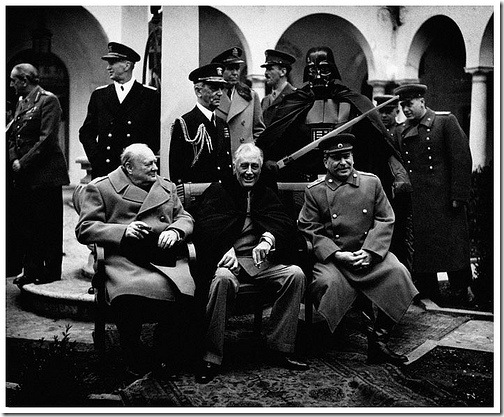
History makes such good raw material for the Photoshop-inclined. See the full set of wonderfully mashed up Superheroes in History from agan harahap. [Via io9]
Digital Culture Links: December 18th 2009
Links for December 16th 2009 through December 18th 2009:
- Privacy groups challenge Facebook on new settings [BBC News] – “Ten privacy groups in the US have filed a complaint to the Federal Trade Commission over Facebook’s new privacy settings. They argue that privacy on the social networking site has been adversely affected as the firm encourages users to open up their profiles. The company changed its privacy settings, ostensibly to make it easier for users to control their profiles. But it also made it easier for content to be shared with all Facebook users. The idea that personal photos and comments can be seen by all 350 million Facebook users has angered privacy groups. The complaint, filed by the Electronic Privacy Information Center and signed by nine other privacy groups, argues that the recent changes “adversely impact users”. Facebook’s changes to users’ privacy settings disclose personal information to the public that was previously restricted,” the complaint read. “
- Microsoft admits code theft for Chinese blog Juku [BBC News] – “Microsoft has indefinitely suspended its Chinese microblogging service MSN Juku after admitting that it “copied” code used to create the site. A vendor contracted to work for the software giant was caught lifting code from a rival Canadian start-up, Plurk. According to Plurk as much as 80% of the basecode was “stolen directly”. Microsoft apologised to Plurk, saying “we are obviously very disappointed but we assume responsibility for this situation”.”
- Child groups slam Conroy’s ISP filtering plans – internet content filtering, mandatory internet fitering, National Children’s and Youth Law Centre (NCYLC), Save the Children [Computerworld] – Children’s rights groups have spoken out against the Federal Government’s plans to introduce mandatory ISP-level filtering, saying it will not effectively protect children. International child rights group, Save the Children, said while it congratulates the government on its attempt to improve the safety of children online, an ISP-level filter is not the best way to offer protection. Child rights specialist, and organisation spokesperson, Dr Annie Pettitt, said it would be more appropriate for the government to educate children and families about appropriate and safe Internet use. “The filter could lull parents into a false sense of security thinking that it is working, but we know hackers are always ahead of those filtering technologies,” Pettitt said. “We could be left in a situation where we think that the filter is sorting out stuff, when in fact it’s not.””
Australian Internet Censorship: No Thanks.

Earlier today I was interviewed by Damien Smith on RTR FM’s morning magazine talking about the Australian Federal Government’s plan to introduce national internet censorship. As you might imagine, I’m not a fan of the plan, and think its the thin edge of a very large, potentially very conservative and encompassing censorship programme. Feel free to listen to the interview, or grab the direct mp3 download, but more than that, please take a look at this material and judge the plan for yourself:
- The Official Report on the ISP Filtering Trial in Australia by Enex
- Net censorship trial report brings more questions than answers by EFA
- Google Australia’s Response to the Internet Filter Plans
- An open letter to Stephen Conroy by Eric Pinkerton
- Welcome to National Censorship Day by David Braue
If you think this is a poor plan for Australia, please let your voice be heard.
Australia’s Compulsory Internet Censorship
Kevin Rudd’s Australian government: maybe one step forward; definitely fifty steps backward.
Internet censorship = a bad idea.

Global Map of Social Web
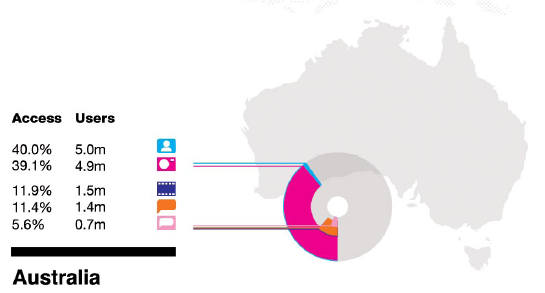
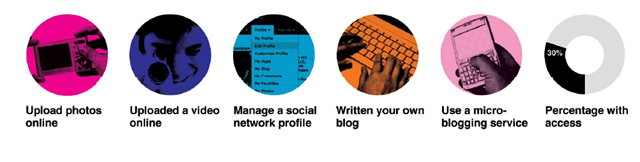
Trendstream have released a really interesting comparative Global Map of Social Media use; China emerges as the biggest user in number terms (but that’s always relatively to population), but Australia’s not looking too shy, either:

Tama Leaver dot Net by Tama Leaver is licensed under a Creative Commons Attribution-NonCommercial-ShareAlike 4.0 International License.